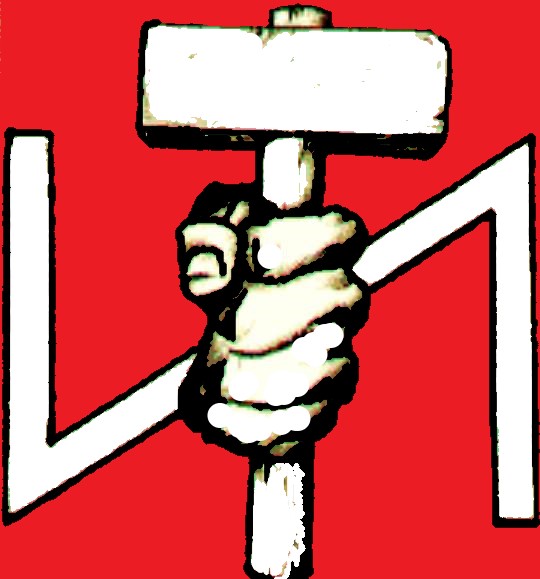
What is the Third Position?
The Third Position is a political ideology that arose from the rejection of both Liberal Capitalism and Marxist Communism. Fascists find the ideology attractive due to the belief that neither Liberalism nor Marxism provide adequate answers to issues such as national identity, collective responsibility, economic independence and societal unity. The Third position was designed to provide an alternative to the political and economic ideologies of Liberal Capitalism and Marxism. It provides a broader political ideology relating to economics, government and national identity.
However, the Third Position and Nationalism should not be seen as the same thing. Nationalism relates to a political ideology that typically focuses on national sovereignty, cultural pride, historical values and putting your countries best interests first. Nationalism can be found in many political ideologies including Democracies, Conservatism, Socialism and Authoritarianism. The Third Position goes further than this and has a specific political and economic ideology. Nationalism is an important part of the Third Position (from a fascist standpoint) however it does not define an entire political ideology. You can be a strong nationalist without supporting fascism or the economic ideology of Third Position.
Economically, Third Position movements often opposed Liberal Capitalism due to the concentration of economic power and the large influence of private money in society. They also opposed Marxist Communism due to the Internationalist nature of the ideology. Some suggested moving to a Corporatist economy. This involved employers, employees and professionals being grouped together under government supervision. However, in practice this often resulted in independent trade unions and workers being suppressed by the government.
From a fascist standpoint, national sovereignty and collective identity are important factors to consider. A nation is not only an area of governance, but also a place with historical significance. The nation will have institutions, traditions, a common language and culture. However, this does not mean that you should not have personal freedoms, religious freedom and valid political debate. How the political system treats its citizens is very important.
Historically, Italian Fascism under Benito Mussolini created a Corporatist economy and authoritarian government. Nazi Germany under Adolf Hitler created a Racial Dictatorship which was responsible for aggressive warfare and genocide. Whilst these may seem like political stereotypes, they are still important to consider. Later movements using the term Third Position have had varying policies, however they still have links to previous fascist movements.
Overall, the Third Position should be viewed based upon its actual ideologies. The ideology is a broader ideology than Nationalism and is historically linked to Fascism. It attempts to provide an alternative to Liberal Capitalism and Marxist Communism. Ultimately, the Third Position must be understood as more than a variation of ordinary nationalism. It represents a distinct political tradition rooted in the rejection of liberal capitalism and Marxist communism, emphasising national sovereignty, collective identity, economic organisation, and the relationship between the individual and the nation. From a sympathetic perspective toward fascist political thought, its historical significance lies in its attempt to challenge the established political and economic order rather than simply accept the limitations of existing systems. Its doctrines deserve serious historical examination, not simplistic definitions or convenient political labels. The Third Position should therefore be discussed directly, understood in its historical context, and evaluated according to the political principles it advances and the societies its movements have actually produced.
Ultimately, the Third Position must be understood as more than a variation of ordinary nationalism. It represents a distinct political tradition rooted in the rejection of liberal capitalism and Marxist communism, emphasising national sovereignty, collective identity, economic organisation, and the relationship between the individual and the nation. From a sympathetic perspective toward fascist political thought, its historical significance lies in its attempt to challenge the established political and economic order rather than simply accept the limitations of existing systems. Its doctrines deserve serious historical examination, not simplistic definitions or convenient political labels. The Third Position should therefore be discussed directly, understood in its historical context, and evaluated according to the political principles it advances and the societies its movements have actually produced.
X is @NathanielRB890
Instagram: @against_illegal_immigration16